

There is a difference between a tool that can read your database and a tool that understands what your database means.
Most AI data tools connect to your data and start answering questions. They learn the structure, index the tables, and get to work.
What they skip is everything that makes the data meaningful: the context, the business logic, the language your organization uses to talk about its own information.
When a question requires any of that, they guess.
Teela goes through a different process entirely before the first question is ever asked. An extraction that reads how your data is organized, how it connects, and what it represents across the business.
By the time your team asks anything, Teela already understands the business behind the database.
That is a fundamentally different starting point than anything else in this space.
Step One: Reading the Structure
When a connection is established, Teela's custom engine, Orko, reads the entire structure of the database and builds a complete map of it:
- Every table and column, every data type, every primary and foreign key relationship
- Indexes and constraints that define how the data is structured
- Explicit relationships between tables and inferred ones based on naming patterns, data types, and structural signals
- The business concepts those tables represent: customers, orders, products, locations, inventory, all identified before anyone has described them
Orko builds a relational understanding of how every piece of the database depends on every other piece, and what those pieces mean to the business that built them.
What this produces before a single question is asked:
- Cross-departmental questions work because the relationships between departments are already mapped
- Multi-table queries return unified answers because Teela already knows how those tables connect
- Questions about customers, orders, and products in the same breath get answered correctly because Orko identified those entities and their relationships before anyone explained them
Teela connects to SQL databases, and for teams working with Google Sheets, Excel files, or CSVs, those sources get converted into structured databases behind the scenes so Orko applies the same full extraction to every connection regardless of where the data started.
Step Two: Making It Visible and Refining It
Once extraction is complete, everything Orko found becomes visible in the Schema Diagram: an interactive map of every table, every relationship, every connection in your database that admins can navigate, arrange, and build on.
This is where the extraction gets refined into something even more precise. Tables that are not relevant to user queries get excluded so they never create noise.
Plain-language documentation gets added directly to tables and columns to capture the business rules and logic that live nowhere in the schema itself.
SQL examples get included to show Teela how specific types of questions should be handled.
Every addition here travels into every future query.
A team that takes the time to document their data at this stage is building a system that will return more accurate, more contextually aware answers for as long as Teela is in use.
Step Three: Teaching Teela Your Language
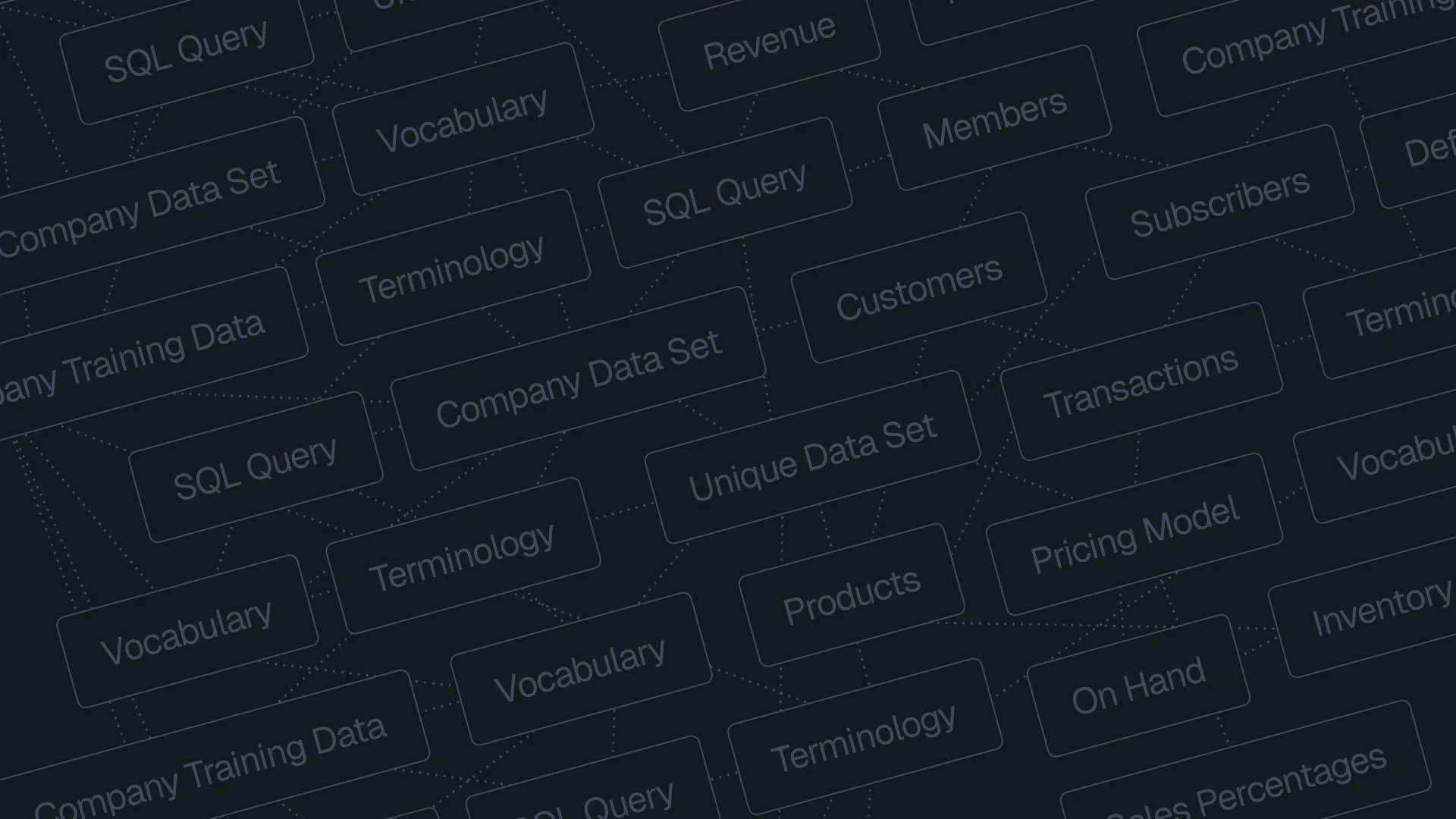
After extraction, Teela launches a vocabulary onboarding process built specifically around what Orko found in the schema.
Every question it asks is generated by the AI based on the specific pillars it detected in your data.
What do you call your customers?
Your products?
Your transactions?
Your locations?
Every database reflects a different business, so every onboarding conversation is different too.
From those answers, Teela builds the layer that makes every future query work the way the business actually thinks:
- Aliases map the language your team uses to the tables and columns underneath, so asking about a client finds the Customer table without anyone having to explain the connection
- Documentation captures business logic in plain language so Teela understands the rules behind the data alongside the data itself
- A data dictionary gets established that every future query runs through
The difference this makes is immediate:
- A team member asking about revenue and a team member asking about sales get the same answer, because Teela already knows those mean the same thing
- Business shorthand, internal nicknames, and team-specific terminology all resolve correctly without anyone having to explain them each time
- Every user on the team is working from the same shared understanding, regardless of how they phrase their question
The Alias Manager extends this beyond the initial setup. As the business changes, new terms get added, stale mappings get cleaned up, and usage across queries stays visible so the vocabulary layer stays accurate over time.
Step Four: Confirming It Works
Before any of this reaches the broader team, the Validation Chat gives admins a way to test it.
Ask questions against the newly extracted and trained connection, review the queries Teela generates, and surface anything that needs correction before it becomes a pattern.
Improvement suggestions come back ranked by impact so the most consequential gaps get addressed first.
When that confirmation is done, the Test Drive puts it directly in the team's hands.
The first real questions get asked, and what comes back already reflects the way the business talks about itself.
For most teams, that moment is the clearest demonstration of what the extraction process actually produced.
And Then It Keeps Learning
Extraction establishes the foundation. Everything built into Teela's latest updates extends it further.
Every interaction the team has from that point forward adds to what Teela knows:
- Positive signals from saved queries, confirmed results, and exports reinforce accurate interpretations
- Friction points surface in the Knowledge Gap Dashboard where admins can close the gaps
- Every proposed update waits for human approval before it takes effect
- The Exploration and Explanation tools draw on the same foundation when they investigate cause or check their own reasoning
- Personal Connections, where individual users bring in their own private data sources, run through the same extraction process so every connection starts with the same depth
The business teaches Teela its language through extraction and onboarding.
Everything after that is refinement, always grounded in what was established at the start and always under the control of the people responsible for it.
Other tools connect to your data and get to work.
Teela connects to your data and learns your business first. Every question your team asks goes into a system that already speaks your language, already knows how your data relates to itself, and already understands the logic behind how your organization is structured.
That is what extraction makes possible, and it is the reason the answers Teela gives are built on something more than a best guess.
Teela is currently in beta. Book a free demo at teela.ai and see what it finds in your data.